Saturday, November 26, 2005

GOOD MORNING VIETNAM! Chapter Five

Chapter 5: Some Miscellaneous Stuff at FSB Pershing

I didn’t really know where these next few things fit into my stories while I was at Pershing, so I just figured I would put them together in this post.


Latrine Duty
When we didn’t have to walk patrol during the day, we just hung around the base camp and tended to daily chores. Things like laundry, writing letters, reading, cleaning our weapons, things like that. There was also one job that everyone took turns doing but didn’t enjoy for obvious reasons, burning shit. Yeah, you read this right, burning shit. The first time I had to do it, I just helped and someone showed me what to do.

www.landscaper.net
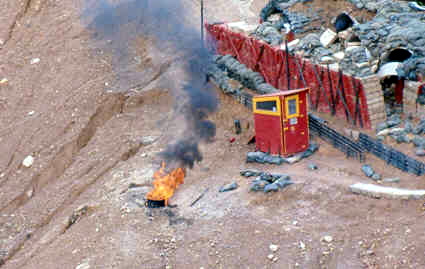
The latrines were like a typical outhouse with half a 55-gallon drum under the seat to catch, well, you know, shit. When the drum was near full, some lucky guy (since I was new in town, this times it was me) would get to go behind the latrine and drag the drum out and off to one side, the downwind side hopefully. Then he’d pour a little diesel fuel into the drum and set it on fire.
www.americanbusinessllc.com
As the contents of the 55-gallon drum burned down, I had to stir it every so often so that all of the contents burned. That’s what the guy in the picture is doing. Being the new guy in town, I got the honors of stiring the shit this time.

Please take note of the black pipe stuck in the ground to the left of the fellow in the picture. That pipe is what was called a “Piss Tube”. I guess I don’t have to explain what that was for?


Sleeping Arrangements
Most of us slept in the bunkers. Typically the floor was covered in wood or a mat of some kind. It’s not very comfortable, but you were sheltered and protected in case we took fire. Each of us was also issued something called a Shelter Half. When you put two of them together, you got a small tent just big enough for two people. A lot of guys got together and set these up. One of the guys in my bunker and I decided one day to do just that. We set it up behind our squad’s bunkers in case we had to take cover quickly. We found some wood for the floor and slept on that. This was a lot better than sleeping on the dirt floor in the bunker. It looked something like this.
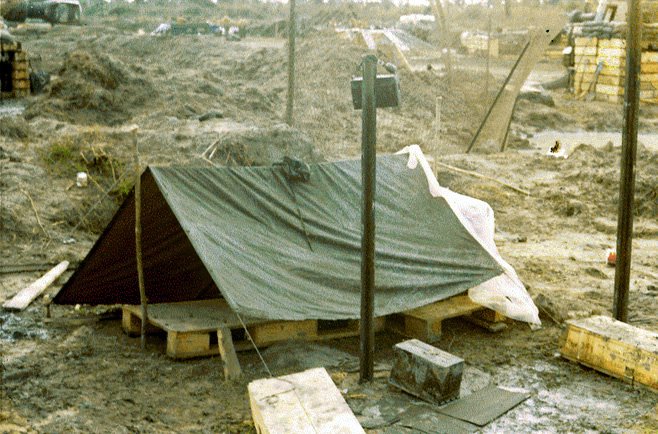
One night when we were sleeping, someone calls out “IN COMING!” I knew what that meant, our nightly mortar attack. I grabbed my M-16, jumped up and out of the tent and dashed over into the first bunker I saw, which by the way wasn’t mine. I landed right in a friggin pool of water. Some assholes decided they wanted to have more headroom in the bunker, so they dug out the floor. Since it was still the rainy season, the floor filled up with muddy water. I sat in the water cursing under my breath waiting for the mortars to stop. They stopped in a minute of so and had landed harmlessly out in the rice paddies. I climbed out of the bunker bitching and moaning, all pissed that I was now soaked with muddy water. I was pissed, but everyone else though it was funny as hell and laughed their ass off.


Claymores
Out in front of each bunker we set up several claymore mines. They were nasty little things that could inflict a lot of damage over a pretty wide area.

The M18 Claymore antipersonnel weapon is a weapon often used by many countries around the world, named after the large Scottish sword. The Claymore is designed to fire steel balls (shrapnel) out to about 100 meters across a 60° arc in front of the device, which stands just off the ground. It is designed primarily to be used in ambushes and as an anti-infiltration device against enemy infantry, however it is also of some use against soft-skinned vehicles.
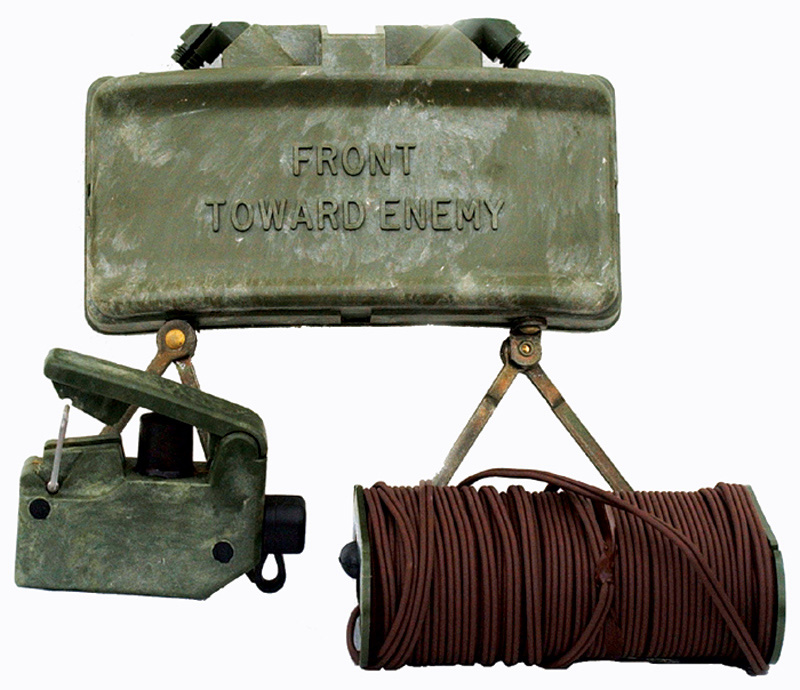
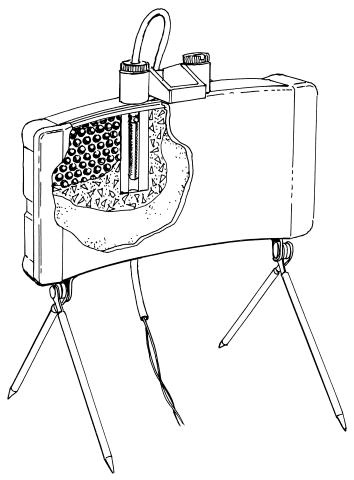
Yes, it really did say “Front Toward Enemy”

One day I was assigned to set up claymores out in front of some bunkers. I remembered how to do it from training so it wasn’t difficult to do.

* Place the mine on the ground
* Aim the mine using the sighting slit
* Firmly press the support legs into the ground, rechecking the aim.
* Lay wire from firing position to the mine.
* Insert blasting cap into either detonator well and secure with the shipping plug.
* With the "Safety" in the "Off" position, insert plug of wire directly into M57 Firing Device. (Boy, did I soon learn that this was an important step)

When you want to fire it:

* Depress the handle (squeeze the device) sharply. This will send an electrical current to the blasting cap, causing it to detonate. The detonation of the cap, in turn, will cause the main charge of C-4 to detonate, sending the steel fragments into the opposing personnel.

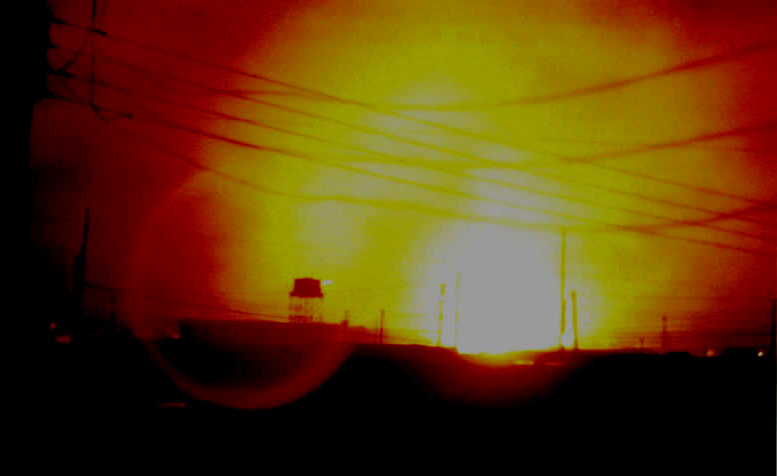
When I finished setting up the claymores, I got the sergeant so he could check how I did. He walked out in front of the bunkers so he could see them and he said everything looked fine. On his way beck to where I was, his foot caught the wire to one of the claymores pulling the firing devise off the bunker. When the firing devise hit the ground, the claymore exploded. It looked something like this.
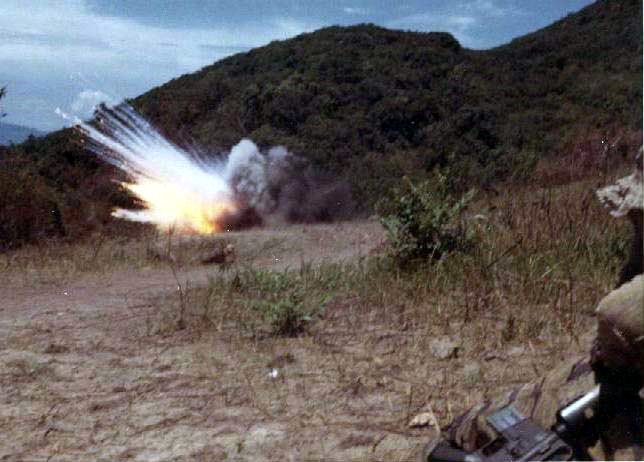
We all jumped sky high but the sergeant froze in his tracks. He turned and looked at me with a look that could kill and walked over to the firing device. He picked it up and showed it to me. I had forgotten to make sure the safety was on.

That little explosion caused quite a ruckus at Pershing that day. The lieutenant and sergeant were called up to speak with the company commander. When they got back I was called over to speak to them and caught a little bit of hell for my incompetence, but I didn't really get in trouble. Just a little yelling and a lecture about keeping my mind on what I was doing, always be aware of what I’m doing and above all, check to make sure the safety on the firing device is ON the next time.

By the way, someone else checked the rest of the firing devices to make sure the safeties were set. I guess the sergeant thought that was probably best for everyone.

Friday, November 25, 2005

GOOD MORNING VIETNAM! Chapter Four

Chapter 4: The Typical Day

Before I get into more of my adventures, I thought I would give you an idea what a typical 24 hour day was like for me.

Most days and nights were uneventful. We’d get up, eat breakfast, walked patrol during the day, stand watch for a couple of hours at night and every few nights, go out on night ambush. Well, except for the almost nightly rockets or mortars while I was at FSB Pershing, but I already told you about that.

First let me tell you about a patrol.

Pa·trol n 1: a detachment used for security or reconnaissance 2: the activity of going around or through an area at regular intervals for security purposes 3: a group that goes through a region at regular intervals for the purpose of security v : maintain the security of by carrying out a control [syn: police]

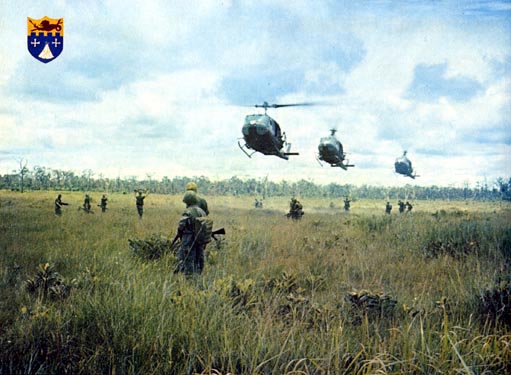
We’d get up not too long after it got light out, clean up, eat breakfast and get a briefing on what we were going to do that day. Then we’d pack up a day’s worth of the supplies we’d need and then head off on patrol. We’d usually just start walking the patrol, but sometimes we’d have to patrol somewhere too far away to walk to, because enemy activity was observed in an area or something like that.. In that case, we would taken by helicopter and then be dropped off and then we’d walk patrol.

Chopper ride

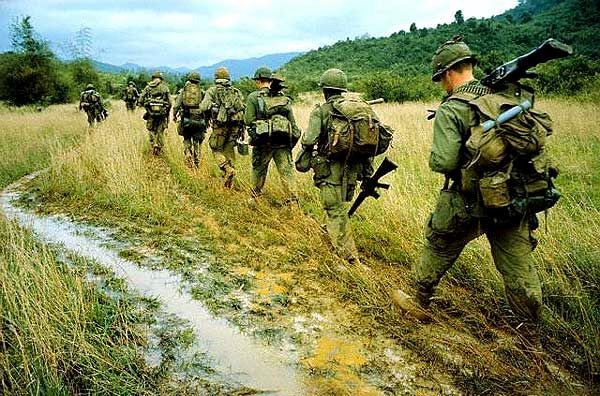
Patrol consisted typically of walking around searching for things and looking at stuff (search and destroy). We’d walk for awhile, stop for a short break and then walk some more until it was time for lunch. Lunch was always a picnic of the always delicious box of C rations. After lunch we’d walk around somemore, take another short and then head back to base camp. Patrol kind of reminded me of exploring the woods and swamps like I did growing up in Florida except in Florida I didn’t carry a rifle and all that other stuff I described in the last chapter.

Walking Patrol
http://storiesfromvietnam.com


Heating up the C-rations over some C-4 if you could get any
http://www.212veterans.org/


Once back in camp, we’d spend the time getting cleaned up, cleaning our weapons and writing letters and stuff like that until dinner. Dinner was always really very good (but then I liked cafeteria food in school so maybe I’m not the best judge). It was always hot and there was plenty of it. We always each got a quart of milk to drink. After dinner we’d retire to our bunkers and hang out before bedtime.
Hanging out
http://www.212veterans.org/


Then there was watch.

Watch v. watched, watch·ing, watch·es v. intr. 1. To look or observe attentively or carefully; be closely observant: watching for trail markers. 2. To look and wait expectantly or in anticipation: watch for an opportunity. 3. To act as a spectator; look on: stood by the road and watched. 4. To stay awake at night while serving as a guard, sentinel, or watcher. 5. To stay alert as a devotional or religious exercise; keep vigil.

When it started to get dark, we took turns standing watch for the night. First watch was always the best because once it was over, you got uninterrupted sleep for the rest of the night. The last watch sucked the most because you had to get up two hours early. Not much else to say about standing watch except it was usually boring and hopefully no one fell asleep while on watch.

My least favorite thing to do was go out on night ambush.

Am·bush n. 1. The act of lying in wait to attack by surprise. 2. A sudden attack made from a concealed position. 3. a. Those hiding in order to attack by surprise. b. The hiding place used for this. 4. A hidden peril or trap.

I hated night ambush more than anything we did. Every few days after we got back from patrol, one of the squads in our platoon (a squad is about 10-12 men), would go out on night ambush. After supper, we’d pack our poncho liner (sort of a small comforter used like a blanket to keep warm), restock anything we’d used during the day like water, ammo, etc, just not food, and head off to set up an ambush.

Officially we’d go to the assigned place, set up a few claymore mines all around us and wait for the bad guys to come by. If they did, we’d shoot at them. Unofficially, we’d usually just go to one of our favorite hiding spots, which was anywhere where we hoped the bad guys would not show up. Then we’d set up the claymores and for the rest of the night be real quiet until it got light out. I was told to never shoot first if I saw anyone. That way, hopefully they’d not see us and just walk on by. The reason we did this was because you never knew if the guys you saw were just a small patrol or the point for a battalion of NVA soldiers. See why we stayed quiet? We’d take turns sleeping and then just after daybreak we’d pack up and go back to camp and spend the rest of the day off duty doing pretty much what ever you wanted to do.

Look, I know I’ve over simplified this whole thing and many combat veterans will find fault with my descriptions, but that really was pretty much what it had been like most days for me. Mixed in amongst those days were the days that I’d wished had never come or would hurry and be over. The days I feared for my life and the lives of those around me. The days I trudged through the rice paddies in the muck and mire. The days I baked in the hot sun or shivered in the cold nights. The days and nights the rain drenched me. The days I was shot at and the days someone was wounded or killed. There were also a lot of good days too. Like the day I took a trip into the division base camp at Cu Chi for the fake tooth ache and the day we bought some scotch from a local and drank it with grape soda. Those are the days I will try to relive for you in the coming chapters.

GOOD MORNING VIETNAM! Chapter Four

Chapter 4: The Typical Day

Before I get into more of my adventures, I thought I would give you an idea what a typical 24 hour day was like for me.

Most days and nights were uneventful. We’d get up, eat breakfast, walked patrol during the day, stand watch for a couple of hours at night and every few nights, go out on night ambush. Well, except for the almost nightly rockets or mortars while I was at FSB Pershing, but I already told you about that.

First let me tell you about a patrol.

Pa·trol n 1: a detachment used for security or reconnaissance 2: the activity of going around or through an area at regular intervals for security purposes 3: a group that goes through a region at regular intervals for the purpose of security v : maintain the security of by carrying out a control [syn: police]

We’d get up not too long after it got light out, clean up, eat breakfast and get a briefing on what we were going to do that day. Then we’d pack up a day’s worth of the supplies we’d need and then head off on patrol. We’d usually just start walking the patrol, but sometimes we’d have to patrol somewhere too far away to walk to, because enemy activity was observed in an area or something like that.. In that case, we would taken by helicopter and then be dropped off and then we’d walk patrol.

Chopper ride

Patrol consisted typically of walking around searching for things and looking at stuff (search and destroy). We’d walk for awhile, stop for a short break and then walk some more until it was time for lunch. Lunch was always a picnic of the always delicious box of C rations. After lunch we’d walk around somemore, take another short and then head back to base camp. Patrol kind of reminded me of exploring the woods and swamps like I did growing up in Florida except in Florida I didn’t carry a rifle and all that other stuff I described in the last chapter.

Walking Patrol
http://storiesfromvietnam.com


Heating up the C-rations over some C-4 if you could get any
http://www.212veterans.org/


Once back in camp, we’d spend the time getting cleaned up, cleaning our weapons and writing letters and stuff like that until dinner. Dinner was always really very good (but then I liked cafeteria food in school so maybe I’m not the best judge). It was always hot and there was plenty of it. We always each got a quart of milk to drink. After dinner we’d retire to our bunkers and hang out before bedtime.
Hanging out
http://www.212veterans.org/


Then there was watch.

Watch v. watched, watch·ing, watch·es v. intr. 1. To look or observe attentively or carefully; be closely observant: watching for trail markers. 2. To look and wait expectantly or in anticipation: watch for an opportunity. 3. To act as a spectator; look on: stood by the road and watched. 4. To stay awake at night while serving as a guard, sentinel, or watcher. 5. To stay alert as a devotional or religious exercise; keep vigil.

When it started to get dark, we took turns standing watch for the night. First watch was always the best because once it was over, you got uninterrupted sleep for the rest of the night. The last watch sucked the most because you had to get up two hours early. Not much else to say about standing watch except it was usually boring and hopefully no one fell asleep while on watch.

My least favorite thing to do was go out on night ambush.

Am·bush n. 1. The act of lying in wait to attack by surprise. 2. A sudden attack made from a concealed position. 3. a. Those hiding in order to attack by surprise. b. The hiding place used for this. 4. A hidden peril or trap.

I hated night ambush more than anything we did. Every few days after we got back from patrol, one of the squads in our platoon (a squad is about 10-12 men), would go out on night ambush. After supper, we’d pack our poncho liner (sort of a small comforter used like a blanket to keep warm), restock anything we’d used during the day like water, ammo, etc, just not food, and head off to set up an ambush.

Officially we’d go to the assigned place, set up a few claymore mines all around us and wait for the bad guys to come by. If they did, we’d shoot at them. Unofficially, we’d usually just go to one of our favorite hiding spots, which was anywhere where we hoped the bad guys would not show up. Then we’d set up the claymores and for the rest of the night be real quiet until it got light out. I was told to never shoot first if I saw anyone. That way, hopefully they’d not see us and just walk on by. The reason we did this was because you never knew if the guys you saw were just a small patrol or the point for a battalion of NVA soldiers. See why we stayed quiet? We’d take turns sleeping and then just after daybreak we’d pack up and go back to camp and spend the rest of the day off duty doing pretty much what ever you wanted to do.

Look, I know I’ve over simplified this whole thing and many combat veterans will find fault with my descriptions, but that really was pretty much what it had been like most days for me. Mixed in amongst those days were the days that I’d wished had never come or would hurry and be over. The days I feared for my life and the lives of those around me. The days I trudged through the rice paddies in the muck and mire. The days I baked in the hot sun or shivered in the cold nights. The days and nights the rain drenched me. The days I was shot at and the days someone was wounded or killed. There were also a lot of good days too. Like the day I took a trip into the division base camp at Cu Chi for the fake tooth ache and the day we bought some scotch from a local and drank it with grape soda. Those are the days I will try to relive for you in the coming chapters.

Thursday, November 24, 2005

Fishing HNT

This BTExpress as a young child at the ripe old age of 5 1/2 somewhere in the Tampa/St Petersburg, Florida area. That's my Polish grandfather in the background. We were out on one of our usual Sunday drives to who knows where. My dad always carried fishing tackle in the car and whenever he saw fishing spot where he thought he could catch something, he'd pull the car over to the side of the road and fish. He always caught something, but today was especially an good day, as you can see in the picture.

I'll never forget this day because it was a day he made me lift this very heavy large mouth bass. He caught the thing, but insisted that I hold the fish and the rod so he could take my picture. I remember telling him it was too heavy, and arguing with him, but he insisted. I struggled, as you can tell by the way I was listing in the shot, but hold it I did.

Isn't it strange the things you remember?

Well, anyway, have a Happy Half-Nekkid Thursday Thanksgiving everyone. I hope you all have a great time this long weekend!

Gobble! Gobble!


Want to have some fun? Click on this chicks boobs and learn all about Half-Nekkid Thursday.

45113638_202b79dc11

Even though I know about HNT, sometimes I click on her boobs just for fun. Hee, hee..........

Fishing HNT

This BTExpress as a young child at the ripe old age of 5 1/2 somewhere in the Tampa/St Petersburg, Florida area. That's my Polish grandfather in the background. We were out on one of our usual Sunday drives to who knows where. My dad always carried fishing tackle in the car and whenever he saw fishing spot where he thought he could catch something, he'd pull the car over to the side of the road and fish. He always caught something, but today was especially an good day, as you can see in the picture.

I'll never forget this day because it was a day he made me lift this very heavy large mouth bass. He caught the thing, but insisted that I hold the fish and the rod so he could take my picture. I remember telling him it was too heavy, and arguing with him, but he insisted. I struggled, as you can tell by the way I was listing in the shot, but hold it I did.

Isn't it strange the things you remember?

Well, anyway, have a Happy Half-Nekkid Thursday Thanksgiving everyone. I hope you all have a great time this long weekend!

Gobble! Gobble!


Want to have some fun? Click on this chicks boobs and learn all about Half-Nekkid Thursday.

45113638_202b79dc11

Even though I know about HNT, sometimes I click on her boobs just for fun. Hee, hee..........

Wednesday, November 23, 2005

GOOD MORNING VIETNAM! Chapter Three

Chapter 3: The Memorial Service

Just after dawn the next morning, the guys that usually man the bunker I was in, got back and I went back to the bunker I was assigned to yesterday. Everyone was getting up and getting ready for the day. I had absolutely no clue what to do, no clue at all. I guess the “veterans” saw my look of confusion and took me under their wings and showed me the ropes. We washed up and then went to breakfast.

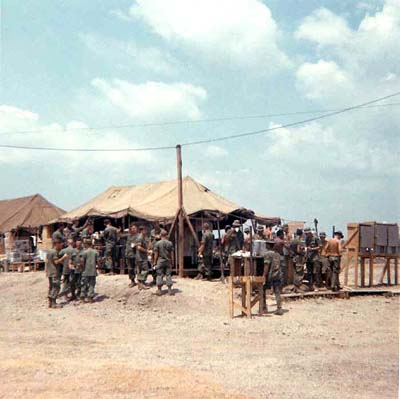
Mess Tent
http://www.gingerb.com
During breakfast we found out that there were a couple of guys killed in the attack last night, I think three, and a few wounded. They said one guy died while he was taking a leak and when the first rocket hit, it killed him. They also told us there was a mandatory memorial service after chow, not like we had to be force to attend.


Memorial Service
http://www.pieceuniquegallery.com
The service was really a frightening thing to experience for me, something like going to your first funeral when you’re young. You know, one-minute you’re here and the next minute your not. The only difference with being in war and being home is that in war, your “family” replaces you pretty easily, but at home, it’s not that simple.

Watching the memorial service made me wonder whom I had replaced and if they would be holding a memorial service for me someday. Someone told that first day, that the rifle I was issued was owned by a guy that was killed before he even got to use it. I just laughed that off because I figured how could anyone tell the difference between all those M-16s. But then I learned that not very long before I got there, a couple weeks maybe, our unit had a lot of casualties and was short handed and that’s why I was sent there, they were short handed.

After the service I was introduced to the guys in my platoon, I wish I could remember some of their names, but after all these years, I just can’t remember them. I have some of them written down somewhere, I'll see if I can find them. I was was also given my assignment. I was as one of the two ammo bearers for the guy that carried the M-60 machine gun. As ammo bearer, I carried a lot of stuff. I carried 400 rounds for the M-60, the ammo magazines for my M-16, a couple of hand grenades and a couple smoke grenades. I also carried an M-72 LAW. Wait, that’s not all. There were also at least 2 canteens of water, more if you could find an extra canteen, a first aid bandage, C-rations and cigarettes. (I think practically everyone smoked) I looked something like the guy in the pictures except I was not this tidy and no jewelry, well except for dog tags. Jewelry could get you killed.


As ammo bearer, I was to stay close to the machine gunner while out on patrol, usually right behind him. Typically, when there was any action, the machine gunner went over to where the fire came from and you know what this meant, I had to be right with him. There was really only one time that that happened but I’ll leave that story for another chapter as that didn’t happen while I was at Pershing.

GOOD MORNING VIETNAM! Chapter Three

Chapter 3: The Memorial Service

Just after dawn the next morning, the guys that usually man the bunker I was in, got back and I went back to the bunker I was assigned to yesterday. Everyone was getting up and getting ready for the day. I had absolutely no clue what to do, no clue at all. I guess the “veterans” saw my look of confusion and took me under their wings and showed me the ropes. We washed up and then went to breakfast.

Mess Tent
http://www.gingerb.com
During breakfast we found out that there were a couple of guys killed in the attack last night, I think three, and a few wounded. They said one guy died while he was taking a leak and when the first rocket hit, it killed him. They also told us there was a mandatory memorial service after chow, not like we had to be force to attend.


Memorial Service
http://www.pieceuniquegallery.com
The service was really a frightening thing to experience for me, something like going to your first funeral when you’re young. You know, one-minute you’re here and the next minute your not. The only difference with being in war and being home is that in war, your “family” replaces you pretty easily, but at home, it’s not that simple.

Watching the memorial service made me wonder whom I had replaced and if they would be holding a memorial service for me someday. Someone told that first day, that the rifle I was issued was owned by a guy that was killed before he even got to use it. I just laughed that off because I figured how could anyone tell the difference between all those M-16s. But then I learned that not very long before I got there, a couple weeks maybe, our unit had a lot of casualties and was short handed and that’s why I was sent there, they were short handed.

After the service I was introduced to the guys in my platoon, I wish I could remember some of their names, but after all these years, I just can’t remember them. I have some of them written down somewhere, I'll see if I can find them. I was was also given my assignment. I was as one of the two ammo bearers for the guy that carried the M-60 machine gun. As ammo bearer, I carried a lot of stuff. I carried 400 rounds for the M-60, the ammo magazines for my M-16, a couple of hand grenades and a couple smoke grenades. I also carried an M-72 LAW. Wait, that’s not all. There were also at least 2 canteens of water, more if you could find an extra canteen, a first aid bandage, C-rations and cigarettes. (I think practically everyone smoked) I looked something like the guy in the pictures except I was not this tidy and no jewelry, well except for dog tags. Jewelry could get you killed.


As ammo bearer, I was to stay close to the machine gunner while out on patrol, usually right behind him. Typically, when there was any action, the machine gunner went over to where the fire came from and you know what this meant, I had to be right with him. There was really only one time that that happened but I’ll leave that story for another chapter as that didn’t happen while I was at Pershing.

Tuesday, November 22, 2005

I know these last couple of posts have been long............

....but that's what happens when one starts posting one's memoirs. ;-)

J/K

I've always wanted to put things on paper that I thought my son and someday maybe my grandkids might want to know about me. I know so little about my father's life and regret that. When I was little, he told me a lot of bedtime stories. I especially loved the ones he told me about his time in the Navy, which was sometime during World War II. I remember a few thing, but it's not much. I don't even know what ships he served on.

Last April I started this blog and every once in a while, I'd write something about my past and some of you seem to like it. The last week or so, I talked a little about my life in Vietnam and received comment about how some of you are sorry your father's won't tell you about their experiences in Nam. That made me think about my regrets concerning my father's military service. Then one thing lead to another and now I'm telling as much as I can remember about that time of my life. I know there long, but that's just the way it is, I'm trying for as much details as possible. I'm not very good at describing things like a "real" author or they would be even longer, be grateful at that at least. ;-)

I have no idea where this will lead, or what I'll eventually do with my stories, except maybe share them with my son, and you guys of course. Just please bare with me and skip them if you get bored. I promise I'll still post my usual blabbering and naked man ass pictures just like I have been.

I know these last couple of posts have been long............

....but that's what happens when one starts posting one's memoirs. ;-)

J/K

I've always wanted to put things on paper that I thought my son and someday maybe my grandkids might want to know about me. I know so little about my father's life and regret that. When I was little, he told me a lot of bedtime stories. I especially loved the ones he told me about his time in the Navy, which was sometime during World War II. I remember a few thing, but it's not much. I don't even know what ships he served on.

Last April I started this blog and every once in a while, I'd write something about my past and some of you seem to like it. The last week or so, I talked a little about my life in Vietnam and received comment about how some of you are sorry your father's won't tell you about their experiences in Nam. That made me think about my regrets concerning my father's military service. Then one thing lead to another and now I'm telling as much as I can remember about that time of my life. I know there long, but that's just the way it is, I'm trying for as much details as possible. I'm not very good at describing things like a "real" author or they would be even longer, be grateful at that at least. ;-)

I have no idea where this will lead, or what I'll eventually do with my stories, except maybe share them with my son, and you guys of course. Just please bare with me and skip them if you get bored. I promise I'll still post my usual blabbering and naked man ass pictures just like I have been.

Monday, November 21, 2005

GOOD MORNING VIETNAM! Chapter Two

Chapter 2: My On the Job Training Starts

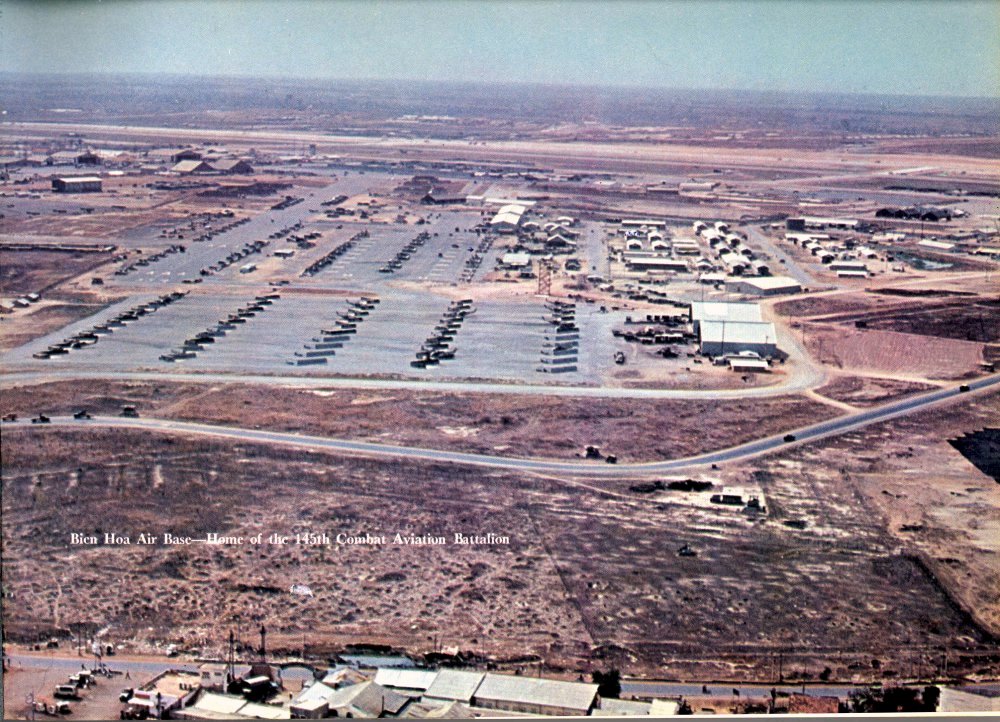
Bien Hoa Airbase
http://www.vhpamuseum.org

When the door of the plane was opened, we disembarked and began walking down the stairs to the tarmac. We went from the comfortable air-conditioned plane into the very hot, muggy, oppressive heat and became instantly drenched in sweat. The air was thick with so many new smells and sounds. There were the never-ending sounds of jets and choppers taking off and landing and the trucks and jeeps that were always on the move. There were so many new smells permeating the air but the one I remember most, the one smell that these some 37 years later instantly brings me back to that time, was the smell of diesel fuel. To this day, whenever I catch a whiff of diesel, I am instantly taken back to that time and transformed into that young soldier again.

http://www.gingerb.com
We were walking toward a building still in awe of what was all around us, when all of a sudden we heard an explosion, then another. Someone started yelling, “Get inside, get inside! Double time, double time!" We were rushed inside the building to a holding area. “OMG! What the fuck is happening?” I said to no one in particular as I ran for the building. Once inside, I saw a lot of people just going about their business like nothing was happening. No one was panicking, its as if no one even knew what was going on outside.

“Okay, calm down!” someone in green jungle fatigues yells out. “It’s over now, so calm down!” Sure enough, it was over, it ended as quickly as it began. The man in the fatigues explained that the airport had been under attack by rockets, that these kinds of attacks happened almost everyday, sometimes more than once. “You’ll get used to it,” he said. "Yeah, right", I thought, "I’ll never get used to that." Little did I know that really I would get used to it just like he said we would.

Off to one side in this holding area was a group of men that were waiting to catch the plane we just got off. They made through the year and now where going home. I remember thinking, would I make it back here in a year to catch that flight back? No time to think, time for another bus ride.

90th Replacement Center at Long Binh
http://saito56.blogster.com/

They took us outside where we boarded some more buses. These had screens over all the windows just in case someone tried to throw a hand grenade or something like that through one of them. The bus took us to the 90th Replacement Center in Long Binh where we went through in processing that lasted most of the night. We were assigned a bunk to catch a little sleep and were up early to eat breakfast and then stand in formation. Formation was held a couple of times a day to assign us to our units. I was assigned to the 25th Infantry Division at Cu Chi.

When my name was called, I was put on a C-130 cargo plane for the flight to the base camp in Cu Chi. It was like a small city. It had every type of facility there was in small cities; swimming pools, bars, slot machines in the bars, a hospital, stores and even saunas. I remember thinking why in the world would they have saunas in such a hot, muggy place? "(massages,hee hee!)

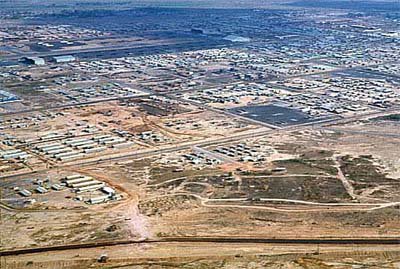
25th Division Base Camp at Cu Chi
I spent a week in Cu Chi going through in-processing and for some specialized training. This training was to teach us the things we needed to know that were not taught in basic training and AIT, like standing "real" guard duty and crawling through a tunnel. After that week at Cu Chi, I was assigned to the 2nd platoon, Bravo Company, 2nd Battalion, 12 Infantry, 25th Infantry Division; B 2/12 as they called it. A group of us got on a supply chopper for the flight to Fire Support Base Pershing, eight miles northwest of Cu Chi in the middle of some rice paddies somewhere.

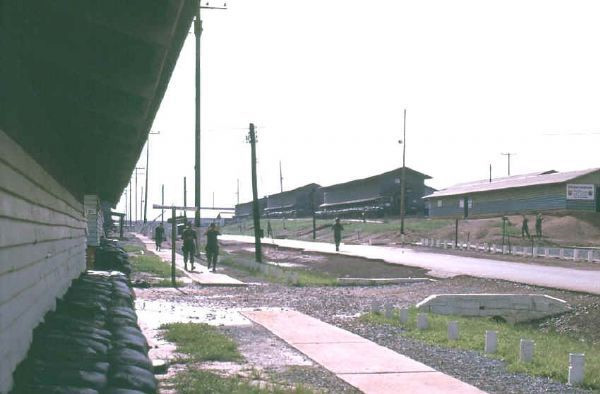
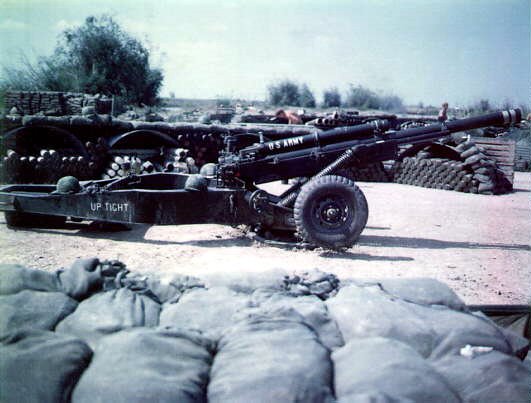
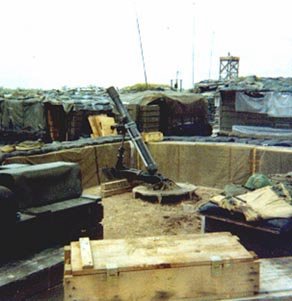
FSB Pershing was a battalion size base camp with four companies of infantry and an artillery and mortar battery. I wasn't at Pershing very long, about a week or so, so I didn't see very much of it. Here are a few pictures I found on the internet at http://www.212veterans.org.

Landing Zone Outside FSB Pershing


View of FSB Pershing


105mm Howitzer


4 1/2 Inch Mortar


Mess Tent
http://www.gingerb.com


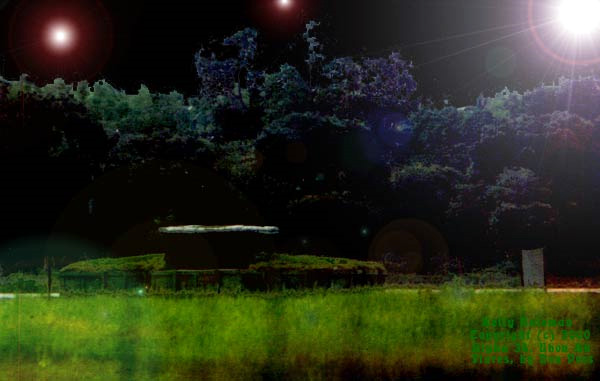
Just before dark that first night, I was sent over to man a bunker, pretty much like the one in the this picture. As you can see, bunkers are really nothing more that a pile of sandbags with a small doorway and a few small holes to look out of. The bunker I was sent to, was usually manned by a few guys in another platoon, but they were sent out on a night ambush patrol that night. There was no one else in it at the time. I was told someone else would be over in a little while and we were to take turns keeping watch that night. That's how every night was, you take turns sleeping and stand watch.

Now picture this, here I am on my first night out in the field, about a million miles from home, in only God knows where, inside a pile of sandbags in total darkness, staring out through a small hole in the front of this pile of sandbags. Since this my first night out in the field, I had no idea what to expect. I was truly scared to death.

Not long goes by and there was a loud explosion somewhere behind my bunker. Next thing I know, flares are going off in the sky lighting the entire area of the perimeter up to the woods.
I scan the horizon searching for the enemy but didn't see any. Then there's another explosion; I’m practically shitting in my pants about now. Just then, someone dashes inside the bunker. Thank God, I’m not alone anymore. I look over quickly at the guy, but don’t see him carrying a weapon.

"Where’s your weapon?”

“I don’t carry one, I’m a medic.”

Oh, that’s great, this guy has no weapon. But then I thought, “Oh well, if I get wounded at least there’s a medic close by."

I look back outside through that little hole in the front of the bunker and Doc looks out of the second little hole. We keep our eyes glued to those little the holes. It all stopped after about 4 or 5 explosions.

It wasn’t very long before I heard a helicopter land in the landing zone in the picture above. I was to find out the next day, that the chopper was a medivac and the explosions I heard were from a rocket attack. Someone came by a few minutes later to see if we were alright. He also brought a radio and told us that about every half-hour, someone would call our position and we were to respond with “Sitrap negative”, meaning no trouble, or “Sitrap positive” if there was any. Then he leaves us. The enemy never did attack that night, and the rest of the night it was quiet.

While I was at Pershing that short time, these kinds of attacks happened pretty much every night, but with mortars that never even hit inside the base camp. The enemy would guess the range from somewhere beyond the tree line and fire a few shells in our general direction, always landing out in the rice paddies somewhere. After a few days, I got used to them like the guy in fatigues at Bien Hoa said we would and just learned to accept them as a fact of life over there.

GOOD MORNING VIETNAM! Chapter Two

Chapter 2: My On the Job Training Starts

Bien Hoa Airbase
http://www.vhpamuseum.org

When the door of the plane was opened, we disembarked and began walking down the stairs to the tarmac. We went from the comfortable air-conditioned plane into the very hot, muggy, oppressive heat and became instantly drenched in sweat. The air was thick with so many new smells and sounds. There were the never-ending sounds of jets and choppers taking off and landing and the trucks and jeeps that were always on the move. There were so many new smells permeating the air but the one I remember most, the one smell that these some 37 years later instantly brings me back to that time, was the smell of diesel fuel. To this day, whenever I catch a whiff of diesel, I am instantly taken back to that time and transformed into that young soldier again.

http://www.gingerb.com
We were walking toward a building still in awe of what was all around us, when all of a sudden we heard an explosion, then another. Someone started yelling, “Get inside, get inside! Double time, double time!" We were rushed inside the building to a holding area. “OMG! What the fuck is happening?” I said to no one in particular as I ran for the building. Once inside, I saw a lot of people just going about their business like nothing was happening. No one was panicking, its as if no one even knew what was going on outside.

“Okay, calm down!” someone in green jungle fatigues yells out. “It’s over now, so calm down!” Sure enough, it was over, it ended as quickly as it began. The man in the fatigues explained that the airport had been under attack by rockets, that these kinds of attacks happened almost everyday, sometimes more than once. “You’ll get used to it,” he said. "Yeah, right", I thought, "I’ll never get used to that." Little did I know that really I would get used to it just like he said we would.

Off to one side in this holding area was a group of men that were waiting to catch the plane we just got off. They made through the year and now where going home. I remember thinking, would I make it back here in a year to catch that flight back? No time to think, time for another bus ride.

90th Replacement Center at Long Binh
http://saito56.blogster.com/

They took us outside where we boarded some more buses. These had screens over all the windows just in case someone tried to throw a hand grenade or something like that through one of them. The bus took us to the 90th Replacement Center in Long Binh where we went through in processing that lasted most of the night. We were assigned a bunk to catch a little sleep and were up early to eat breakfast and then stand in formation. Formation was held a couple of times a day to assign us to our units. I was assigned to the 25th Infantry Division at Cu Chi.

When my name was called, I was put on a C-130 cargo plane for the flight to the base camp in Cu Chi. It was like a small city. It had every type of facility there was in small cities; swimming pools, bars, slot machines in the bars, a hospital, stores and even saunas. I remember thinking why in the world would they have saunas in such a hot, muggy place? "(massages,hee hee!)

25th Division Base Camp at Cu Chi
I spent a week in Cu Chi going through in-processing and for some specialized training. This training was to teach us the things we needed to know that were not taught in basic training and AIT, like standing "real" guard duty and crawling through a tunnel. After that week at Cu Chi, I was assigned to the 2nd platoon, Bravo Company, 2nd Battalion, 12 Infantry, 25th Infantry Division; B 2/12 as they called it. A group of us got on a supply chopper for the flight to Fire Support Base Pershing, eight miles northwest of Cu Chi in the middle of some rice paddies somewhere.

FSB Pershing was a battalion size base camp with four companies of infantry and an artillery and mortar battery. I wasn't at Pershing very long, about a week or so, so I didn't see very much of it. Here are a few pictures I found on the internet at http://www.212veterans.org.

Landing Zone Outside FSB Pershing


View of FSB Pershing


105mm Howitzer


4 1/2 Inch Mortar


Mess Tent
http://www.gingerb.com


Just before dark that first night, I was sent over to man a bunker, pretty much like the one in the this picture. As you can see, bunkers are really nothing more that a pile of sandbags with a small doorway and a few small holes to look out of. The bunker I was sent to, was usually manned by a few guys in another platoon, but they were sent out on a night ambush patrol that night. There was no one else in it at the time. I was told someone else would be over in a little while and we were to take turns keeping watch that night. That's how every night was, you take turns sleeping and stand watch.

Now picture this, here I am on my first night out in the field, about a million miles from home, in only God knows where, inside a pile of sandbags in total darkness, staring out through a small hole in the front of this pile of sandbags. Since this my first night out in the field, I had no idea what to expect. I was truly scared to death.

Not long goes by and there was a loud explosion somewhere behind my bunker. Next thing I know, flares are going off in the sky lighting the entire area of the perimeter up to the woods.
I scan the horizon searching for the enemy but didn't see any. Then there's another explosion; I’m practically shitting in my pants about now. Just then, someone dashes inside the bunker. Thank God, I’m not alone anymore. I look over quickly at the guy, but don’t see him carrying a weapon.

"Where’s your weapon?”

“I don’t carry one, I’m a medic.”

Oh, that’s great, this guy has no weapon. But then I thought, “Oh well, if I get wounded at least there’s a medic close by."

I look back outside through that little hole in the front of the bunker and Doc looks out of the second little hole. We keep our eyes glued to those little the holes. It all stopped after about 4 or 5 explosions.

It wasn’t very long before I heard a helicopter land in the landing zone in the picture above. I was to find out the next day, that the chopper was a medivac and the explosions I heard were from a rocket attack. Someone came by a few minutes later to see if we were alright. He also brought a radio and told us that about every half-hour, someone would call our position and we were to respond with “Sitrap negative”, meaning no trouble, or “Sitrap positive” if there was any. Then he leaves us. The enemy never did attack that night, and the rest of the night it was quiet.

While I was at Pershing that short time, these kinds of attacks happened pretty much every night, but with mortars that never even hit inside the base camp. The enemy would guess the range from somewhere beyond the tree line and fire a few shells in our general direction, always landing out in the rice paddies somewhere. After a few days, I got used to them like the guy in fatigues at Bien Hoa said we would and just learned to accept them as a fact of life over there.